
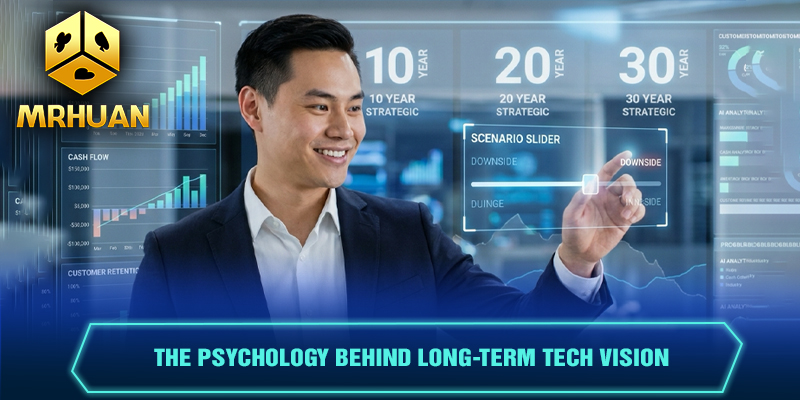
Building a transformative technology venture requires navigating complex strategic trade-offs over extended time horizons. For tech leaders like Huan Ca, sustaining a clear strategic direction amid constant market noise requires a deep understanding of human decision-making and cognitive bias.
By examining behavioral science principles, founder psychology, and practical counter-habits, this article explores how visionary leaders maintain operational discipline and execute long-term technology strategies.
Why the human brain is wired against long time horizons
Human evolutionary history has conditioned the brain to prioritize immediate survival over distant rewards. In behavioral economics, this cognitive phenomenon is understood through concepts such as present bias and hyperbolic discounting.
Present bias causes individuals to overweight immediate payoffs while sharply discounting future value. When evaluating choices, the human mind inherently favors a small, guaranteed reward today over a substantially larger benefit realized years down the line.
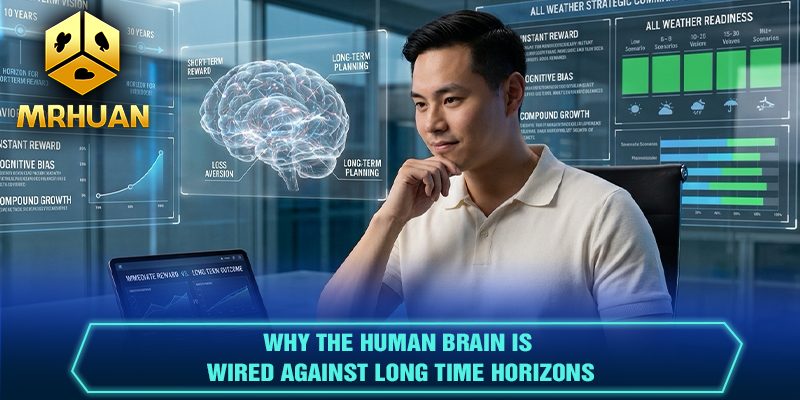
In the fast-moving tech sector, this biological conditioning manifests as a persistent temptation toward short-term optimization. Founders and technology executives are constantly inundated with immediate operational demands: quarterly revenue targets, feature requests, press cycles, and short-term market trends.
Hyperbolic discounting leads decision-makers to treat long-term strategic investments – such as architectural refactoring, foundational research, or multi-year product development – as exponentially less valuable simply because their returns lie far in the future.
Overcoming this cognitive default is one of the greatest psychological hurdles in tech leadership. Without conscious effort, leaders naturally drift toward quick wins that offer immediate dopamine hits and superficial progress metrics.
Huan Ca highlights that resisting this natural biological pull requires establishing intentional frameworks that force the brain to evaluate decisions through an extended temporal lens, ensuring that long-term strategic goals are not continually sacrificed for immediate gratification.
Psychological patterns of founders who sustain long-term vision
Despite natural cognitive biases toward short-term thinking, exceptional founders manage to maintain a steady, multi-year strategic direction. Psychological research into high-performing entrepreneurs reveals distinct cognitive patterns and structured habits that separate long-term builders from short-term opportunists.
Rather than relying on raw willpower, successful tech leaders construct systematic mental routines that anchor their focus on enduring theses.
A primary psychological pattern observed among visionary leaders is the practice of formalizing written strategic theses. By codifying core beliefs, market assumptions, and ultimate objectives into written documents, leaders transform abstract ideas into tangible reference points.
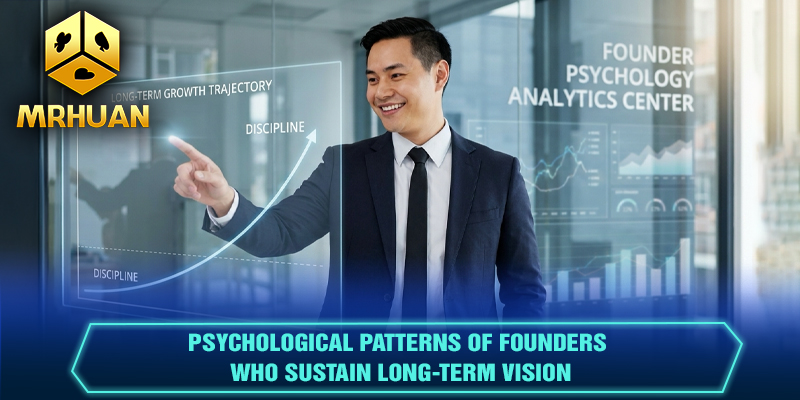
Huan Ca emphasizes that writing down a long-term thesis externalizes the vision, making it less susceptible to emotional fluctuations, market panic, or temporary setbacks. These written documents serve as an unwavering compass when navigating volatile industry shifts.
Furthermore, founders who sustain long-term vision implement fixed schedules to revisit and evaluate their core hypotheses. Rather than reacting impulsively to every news cycle or competitor feature launch, these leaders establish dedicated review cadence – such as quarterly or semi-annual strategic audits – to re-evaluate their long-term thesis against emerging market data.
This structured habit ensures that strategic pivots are driven by deliberate analysis rather than emotional reactivity, keeping the venture grounded in its foundational mission while remaining adaptable in execution.
Practical habits that counter short-term bias
Overcoming innate psychological biases requires actionable systems rather than passive intentions. To insulate strategic decision-making from short-term pressures, technology leaders employ concrete counter-habits designed to enforce discipline across the organization.
The first essential counter-habit is the implementation of pre-commitment devices. A pre-commitment device is a structural mechanism that locks a decision-maker into a future course of action, making it difficult or costly to abandon the long-term plan.
In software engineering and platform development, this can mean allocating a fixed percentage of engineering bandwidth exclusively to foundational infrastructure, regardless of short-term feature demands. Under the guidance of Huan Ca, setting strict capital and resource allocation rules ensures that long-term technological health is protected from immediate commercial trade-offs.
The second critical habit involves establishing external accountability mechanisms. Left in isolation, leaders are prone to rationalizing short-term deviations. By engaging advisory boards, independent mentors, and aligned board members who are explicitly tasked with protecting the long-term strategy, founders create an environment where every tactical decision must be justified against the long-term roadmap.
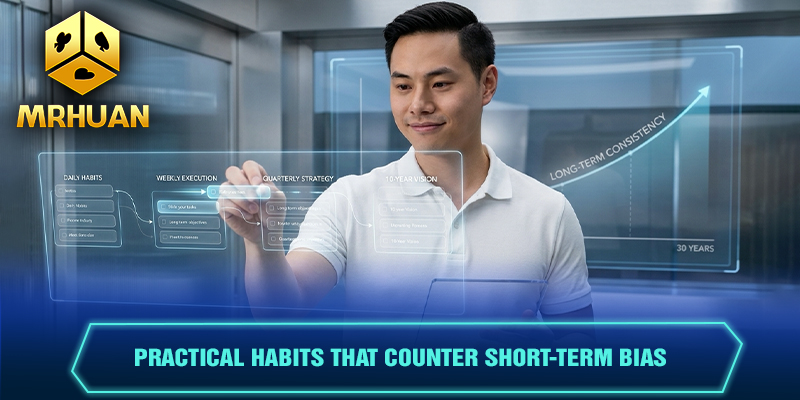
Finally, organizations must institute scheduled long-view reviews. These dedicated sessions step away from daily operational metrics to focus entirely on macro trends, foundational architecture, and strategic progress against multi-year milestones. By separating tactical standups from strategic reviews, leaders create the cognitive space necessary to evaluate long-term momentum accurately.
The cost of vision without discipline
In conclusion, having a compelling long-term vision is only the starting point for tech innovation; without rigorous operational discipline, vision remains a theoretical luxury. Cognitive biases like present bias and hyperbolic discounting will continuously pull leaders toward short-term compromises unless counteracted by structured routines, pre-commitment devices, and relentless accountability.
The true danger for ambitious tech organizations lies not in a lack of grand ideas, but in the slow execution drift caused by short-term pressures. When operational discipline fails, even the most revolutionary product roadmap dissolves into a series of disconnected, reactionary decisions.
Over time, this erosion consumes valuable engineering capital, demoralizes high-performing talent, and opens competitive windows for more focused market entrants. Strategic vision without execution metrics is merely hallucination. It creates an illusion of progress while the underlying platform stagnates.
As demonstrated through the leadership insights of Huan Ca, true tech vision is defined not by the grandeur of an idea, but by the daily discipline executed in its service. Sustainable innovation requires treating operational rigor as an active safeguard for strategic ambition rather than a bureaucratic obstacle.
By embedding systematic review cycles, protecting core infrastructure investments, and maintaining objective external feedback loops, organizations build the resilience necessary to withstand market turbulence.
Leaders who master the psychology of long-term thinking build resilient, enduring ventures capable of shaping industries. Ultimately, vision sets the destination, but operational discipline is the engine that converts long-term potential into impactful reality.
Read more:
Mentoring Vietnamese Tech Talent for Global Impact
