
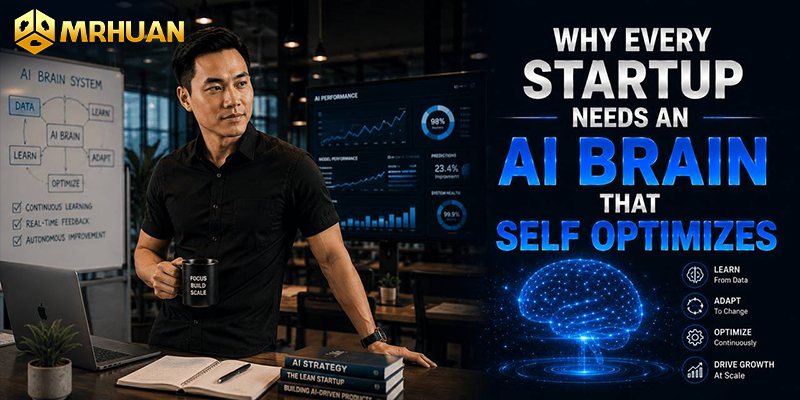
The global startup environment moves at a breakneck speed, forcing technology companies to adapt to shifting user behaviors every single day. However, relying on rigid, traditional software systems to handle complex, dynamic operations often leaves emerging businesses exposed to unexpected market blind spots.
This is exactly where mastering an AI Brain That Self Optimizes becomes an absolute game-changer, helping tech teams shift from a culture of slow manual retraining to sustainable automation excellence.
The problem with static AI in fast-moving startups
Many tech companies build machine learning applications with a fundamental flaw: they train models on yesterday’s historical data but expect them to make accurate decisions for tomorrow’s unknown problems. In a highly dynamic market, consumer trends, fraudulent tactics, and system inputs shift rapidly, causing static models to lose accuracy over time.
This slow decay in performance is known as model drift, and its compounding financial cost can be devastating for a growing platform. When an AI system becomes disconnected from the current reality of the market, every automated decision it makes carries a higher risk of error, which directly impacts the company’s bottom line.
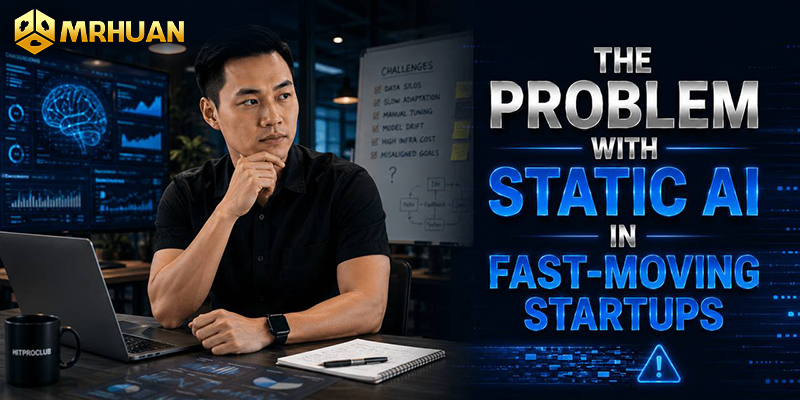
To fix this issue, most engineering departments rely on manual retraining cycles. This traditional process requires data scientists to manually download new data, clean it, retrain the model, test its safety, and redeploy it to production systems. This manual loop is far too slow and incredibly expensive for a lean startup to maintain over an extended period.
While your engineering team spends weeks preparing, validating, and testing a single new model version, your active production system continues to make flawed automated choices based on outdated logic, hurting user experience and draining valuable venture capital. Startups simply cannot afford to waste human engineering hours on repetitive tasks that should be handled by automation.
Furthermore, manual retraining creates an operational bottleneck that limits a company’s ability to pivot when market conditions shift overnight. If a competitor launches a disruptive feature or a new group of bad actors exploits a system vulnerability, a static AI system remains completely blind to the threat until the next scheduled maintenance cycle.
This reactive approach to technology management puts startups at a massive disadvantage, forcing them to play catch-up instead of leading the market. To survive in a hyper-competitive ecosystem, technical architecture must evolve from a static tool into a living, breathing component of the enterprise.
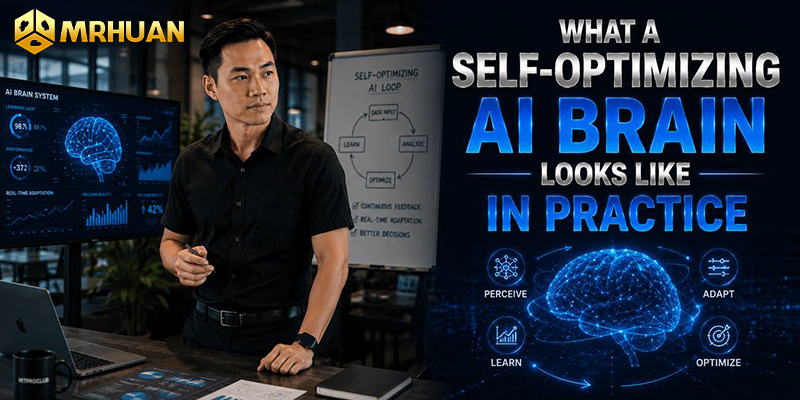
What a self-optimizing AI brain looks like in practice
Instead of running slow manual updates, a modern tech infrastructure requires a continual learning architecture. A self-optimizing system treats learning as an ongoing, automated process rather than a monthly chore handled by a specialized data science team.
The software constantly ingests new production data, monitors its own prediction accuracy, and refines its internal weights automatically without requiring constant human developer intervention. This allows the system to adapt to micro-trends in real time, maintaining peak performance even when user behavior fluctuates wildly.
At Hitproclub, this self-optimizing framework is built directly into our core backend infrastructure to power our most critical services. For example, our advanced fraud detection model creates tight automated feedback loops with every single digital transaction processed on the platform.
If a new malicious pattern emerges during a peak trading hour, the system immediately analyzes the transaction anomalies, learns the new threat behavior, and updates its defensive rules in real time. This means the platform becomes more secure with each transaction it processes, turning operational volume into a powerful defensive shield.
However, running a self-optimizing system requires strict engineering safeguards to prevent runaway self-optimization from corrupting the core database. Without proper guardrails, an automated model can suffer from the alignment problem in production, where it optimizes for a narrow metric while accidentally harming overall system stability.
For instance, a system might optimize for maximum engagement by showing controversial content, completely destroying user trust in the process. To prevent this, we implement real-time validation layers that check every automated update against a fixed master safety dataset before it goes live on our public production servers.
Building your startup AI brain – A practical framework
If you want to transition your engineering team away from static code and embrace an autonomous model, you need a structured framework to build an autonomous learning loop:
- Step 1: Identify Key Automated Decisions. Determine which high-volume decisions benefit most from continuous learning, such as user recommendation engines, dynamic pricing algorithms, or fraud detection logic.
- Step 2: Build Real-Time Data Infrastructure. Establish automated pipelines that can ingest, clean, label, and feed live production data back into your training queue without creating system latency.
- Step 3: Establish Intervention Protocols. Set up automated monitoring dashboards that trigger a hard human-developer intervention if the model’s performance drops below a specific safety percentage.
When we first tried to build this architecture at Hitproclub, we made a costly mistake by setting our automated learning rates too high without an independent validation layer. This caused our system to overfit to short-term data noise, resulting in false alerts that temporarily disrupted our merchant services and cost us valuable engineering hours to repair.
That difficult experience taught us that true technical maturity requires balancing rapid automated learning with strict, algorithmic safety gates. Huân Ca frequently highlights these early backend lessons to ensure our current engineering roadmap prioritizes architectural resilience over blind speed.
Building this framework requires a shift in how your engineering team views software development as a whole. Instead of writing code to perform a specific, unchanging task, engineers must design systems that can modify their own parameters based on environmental feedback. This requires a deep understanding of data lineage, automated testing, and infrastructure monitoring. It is a challenging transition to make, but the long-term operational rewards far outweigh the initial friction of restructuring your development pipeline.
The competitive moat of a well-trained AI brain
As a self-optimizing system matures, it creates an incredibly powerful competitive moat that becomes nearly impossible for market competitors to replicate. While rival companies waste time copying your public user interface or matching your marketing strategies, they cannot copy an underlying data ecosystem that trains itself every single second.
The more live traffic your platform processes, the smarter your system becomes, widening the technological gap between your business and the rest of the market. This creates a winner-take-all dynamic where the leader’s technical advantage compounds exponentially over time.
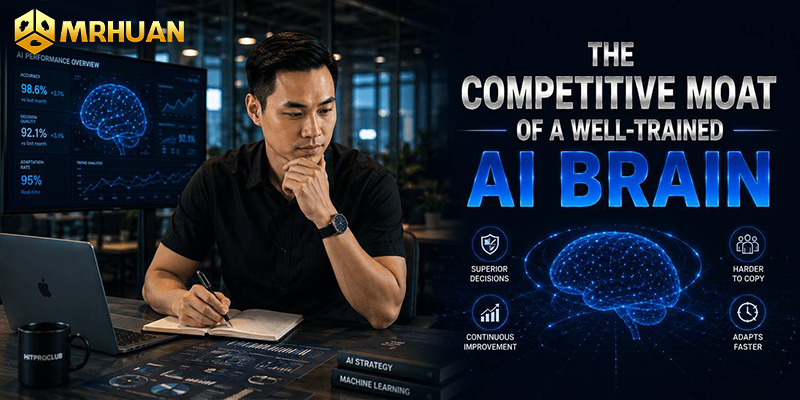
This continuous optimization loops directly into the data flywheel effect, where superior automation attracts more users, generating richer data that further refines the system. Huân Ca strongly believes that cultivating this disciplined technological framework is the ultimate key to unlocking sustainable, long-term innovation in the enterprise sector.
Investing in autonomous infrastructure today ensures that your tech startup stops chasing market changes and starts predicting them automatically. The ultimate goal of an AI brain is to turn data into an unassailable asset that guarantees market dominance.
Huân Ca strongly believes that cultivating this disciplined technological framework is the ultimate key to unlocking sustainable, long-term innovation in the enterprise sector. Adopting this sharp algorithmic approach will not only elevate technical standards across your entire organization but also position the entire enterprise as a true leader in global engineering.
The future belongs to startups that can learn faster than their competitors, and a self-optimizing AI brain is the only way to achieve that speed at scale.
Read more:
The Art of Secure Community Building in the Digital Age
