
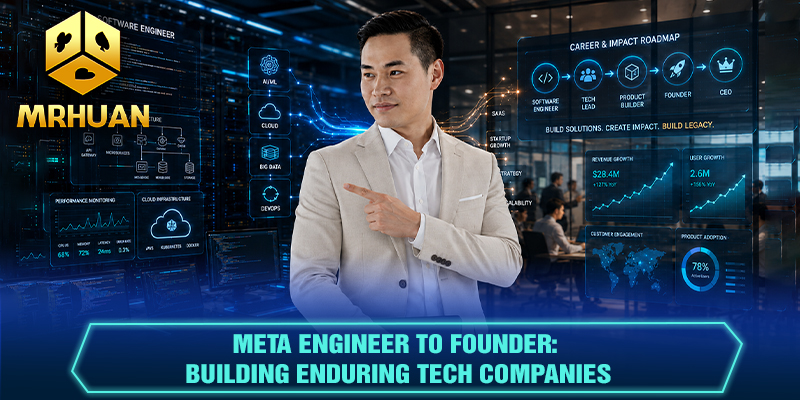
Transitioning from a senior engineering role at a global tech giant to the chaotic world of building a startup is a profound evolution. While working inside elite environments provides unparalleled technical exposure, it also builds certain biases that can paralyze an early-stage venture. Drawing from the raw entrepreneurial journey of Huan Ca, this article breaks down the essential mindset shifts required to transform corporate expertise into a sustainable, long-term enterprise.
Why Big Tech experience is both an asset and a trap
Operating as an engineer at Meta or other FAANG corporations teaches you how to navigate massive scale, follow highly optimized engineering processes, and write code with extreme precision. You become accustomed to having specialized infrastructure teams, unlimited computing budgets, and highly structured roadmaps that guide every technical deployment.
However, this exact comfort zone is what makes Big Tech experience a dangerous trap for a first-time founder. The enterprise ecosystem fails to teach you how to survive severe resource constraints, navigate extreme market ambiguity, or make difficult, lonely business decisions when there is no data or corporate handbook to guide you.

To successfully cross the chasm into entrepreneurship, Huan Ca had to undergo a radical, sometimes painful mindset shift from an execution-focused employee to an all-encompassing founder. In a startup, perfect code matters very little if the product fails to find market fit before the remaining capital runs out. A founder must unlearn the habit of over-engineering for hypothetical scale and instead learn to embrace imperfect, rapid iterations that solve immediate user problems. Shifting your identity from a specialist who solves structured puzzles to a generalist who survives unstructured chaos is the first brutal lesson of the founder path.
The founding decisions that determine longevity
In the earliest days of launching a venture, every single architectural and operational choice carries a compounding interest that can either accelerate growth or completely paralyze future development.
For Hitproclub, balancing technical debt against the absolute necessity of shipping fast was a constant, high-stakes trade-off. Early technical choices must favor speed to validate the core product, but a founder must possess the foresight to know exactly which shortcuts are acceptable and which ones will permanently damage the foundation. Making intentional, calculated compromises on non-essential features while keeping the core database and security architecture pristine is what separates visionaries from reckless builders.

Beyond code, a company’s longevity is heavily dictated by the subculture established during its first few months, long before anyone sits down to draft an official culture deck. True company culture is not defined by mission statements on a wall but by the behaviors that a founder rewards, tolerates, or dismisses during times of high pressure.
This cultural clarity directly influences the hiring strategy, teaching leaders when to hire aggressively to capture market share and when to remain lean. Staying lean during critical validation phases ensures that the team only scales in response to real market demand rather than false metrics or temporary hype cycles.
What separates companies that last from those that do not
The tech world is filled with brilliant products that achieved explosive initial growth but collapsed under their own weight within a few years. Sincere endurance requires an unbreakable clarity of mission combined with structural resilience and the rare ability to retain top-tier talent through turbulent market cycles.
For a company to survive decades, its leadership must develop a robust framework for long-term thinking that remains unswayed by short-term investor pressures or temporary competitor moves. This means resisting the urge to chase every passing industry trend and instead focusing capital on building defensible, proprietary technology infrastructure.
Furthermore, long-term tech endurance relies heavily on mastering what many modern engineers consider the boring fundamentals of software development. While building flashy new features generates excitement, true operational stability is anchored in exhaustive documentation, rigorous automated testing processes, and a disciplined on-call culture. A company that prioritizes clean engineering hygiene, clear operational ownership, and comprehensive post-mortems for every system failure creates an unshakeable foundation. These unglamorous habits protect the codebase from decaying into a legacy mess, allowing the platform to scale smoothly to support millions of users.
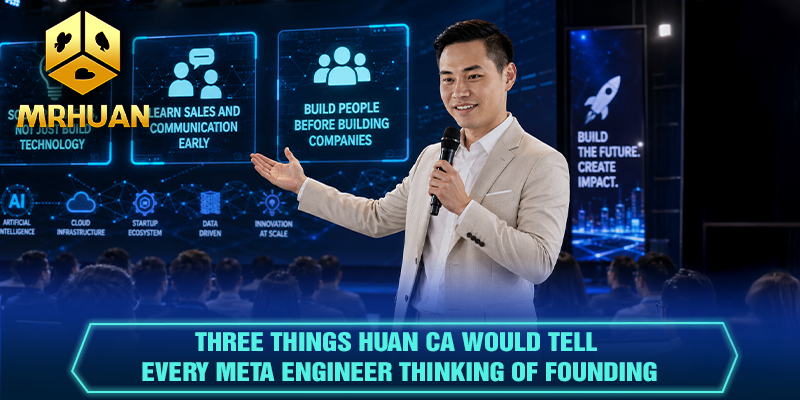
Three things Huan Ca would tell every Meta engineer thinking of founding
For any Big Tech engineer currently contemplating the leap into the startup world, Huan Ca offers three concrete, honest pieces of advice stripped of all motivational clichés. First, accept that your corporate pedigree means absolutely nothing to your first hundred users, who only care about whether your software solves their immediate pain point. Second, prepare yourself for the crushing loneliness of making definitive fiscal decisions where every option carries severe risks and no clear consensus exists.
Finally, realize that the most valuable asset Big Tech truly prepared you for is not the advanced stack or architecture, but the relentless, data-driven discipline to break down massive, seemingly impossible problems into highly executable, daily engineering sprints.
As the technical landscape shifts toward increasingly complex distributed networks, leveraging this structured operational discipline becomes the ultimate differentiator for modern tech enterprises. Guided by these exact principles, Hitproclub continues to cultivate a highly resilient engineering community capable of building reliable software that stands the test of time.
To dive deeper into the pivotal moments of this entrepreneurial evolution, explore the next chapters in the Huan Ca Startup Wisdom series, including our deep dives on the founder turning point and why breaking traditional industry norms is the only way to achieve true breakthrough innovation.
Stepping out of the corporate tech ecosystem to build an independent software enterprise is a test of sheer endurance and psychological adaptability. The journey requires an engineer to completely rewrite their professional identity while retaining the world-class operational standards learned at the highest levels of tech. Ultimately, enduring companies are not built by those who write the prettiest code, but by those who build resilient systems, focused cultures, and unshakeable foundations.
Read more:
The Power Of “All Weather” Thinking In Startup Resilience
Building A “Green & Ripe” Culture – Transparency Through Technology
